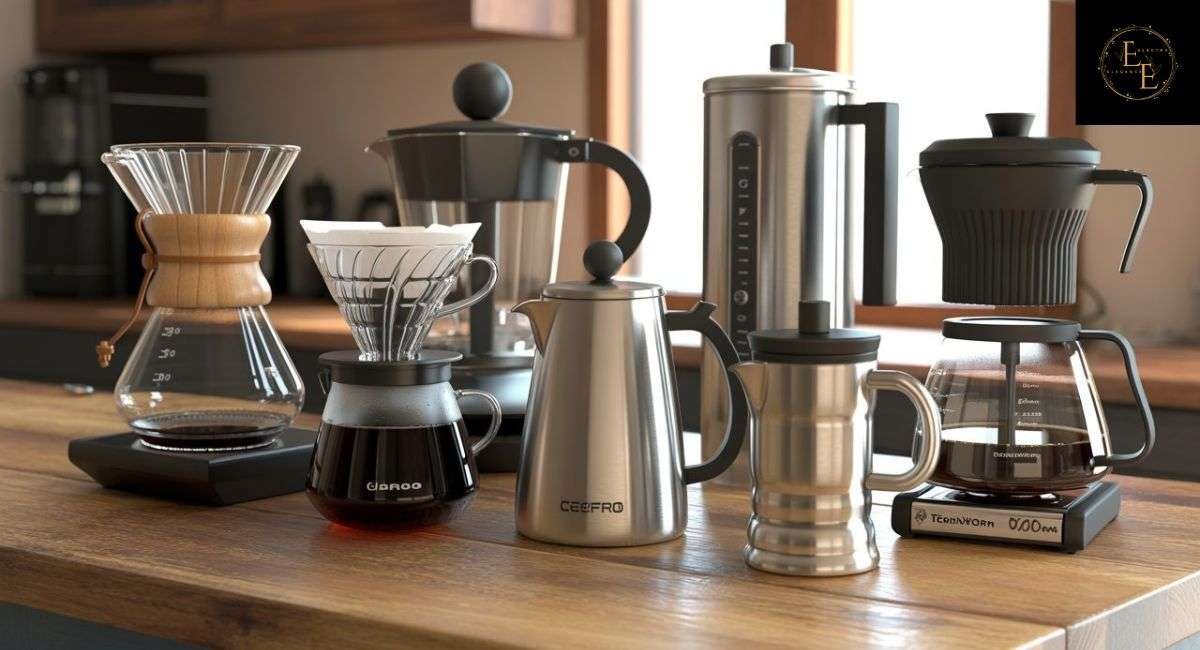
Choosing the Best Non Toxic Coffee Maker is essential for anyone who values both health and flavor in their daily brew. Many conventional machines contain plastic components, aluminum, or chemical coatings that may leach harmful substances into coffee when exposed to heat. A non-toxic coffee maker is designed with safer materials like stainless steel, glass, and BPA-free parts, helping preserve the purity of every cup.
By investing in non toxic coffee makers, you reduce exposure to unwanted chemicals while enjoying cleaner taste and aroma. Whether you prefer drip, espresso, or French press, selecting a chemical free coffee maker ensures peace of mind, long-term wellness, and a better overall coffee experience.
Why Choosing the Best Non Toxic Coffee Maker Actually Matters
Heat changes everything. When hot water moves through plastic tubing or coated surfaces, it can pull trace chemicals into your drink. Studies on BPA, phthalates, and PFAS show repeated low exposure matters more than single contact. Coffee magnifies that risk due to heat and acidity.
Taste also suffers. Plastic and low-grade metals mute aromas and flatten flavor. Brewers made from borosilicate glass, food-grade stainless steel, or ceramic preserve clarity and mouthfeel. The best non toxic coffee maker protects both your body and your beans, cup after cup, year after year.
What Makes a Coffee Maker Truly Non Toxic
True safety begins with materials that stay stable under heat. Borosilicate glass resists thermal shock and chemical release. Stainless steel, when properly graded, avoids corrosion and metallic flavors. Ceramic offers neutrality but requires quality glazing. These materials form the backbone of a non toxic coffee maker.
Equally important is what’s missing. Internal plastic water paths, mystery alloys, and nonstick coatings introduce uncertainty. Certifications help, but transparency matters more. Brands that openly list materials signal trust. The best non toxic coffee maker leaves nothing vague and nothing questionable.
Brewing Methods Ranked by Toxicity Risk
Manual brewing sits at the safest end. Pour over and French press methods limit contact points and avoid internal heating elements. With fewer materials involved, there’s less opportunity for chemical migration. This simplicity explains why manual brewers dominate discussions around the best non toxic coffee maker.
Electric drip machines vary widely. Some use safe carafes but hide plastic reservoirs or aluminum heaters. Vacuum brewers, though rare, rely mostly on glass and controlled heat. Understanding method-based risk helps you choose beyond brand names and marketing language.
Best Non Toxic Coffee Makers, Tested & Reviews
Choosing the right brewer means balancing safety, routine, and taste preference. Below, each category focuses on designs that minimize chemical exposure while delivering consistent results. Every option listed earns consideration for anyone seeking the best non toxic coffee maker without sacrificing enjoyment.
Best Non Toxic Pour Over Coffee Makers
Chemex Classic Series – Pour Over Coffee Maker (Glass)
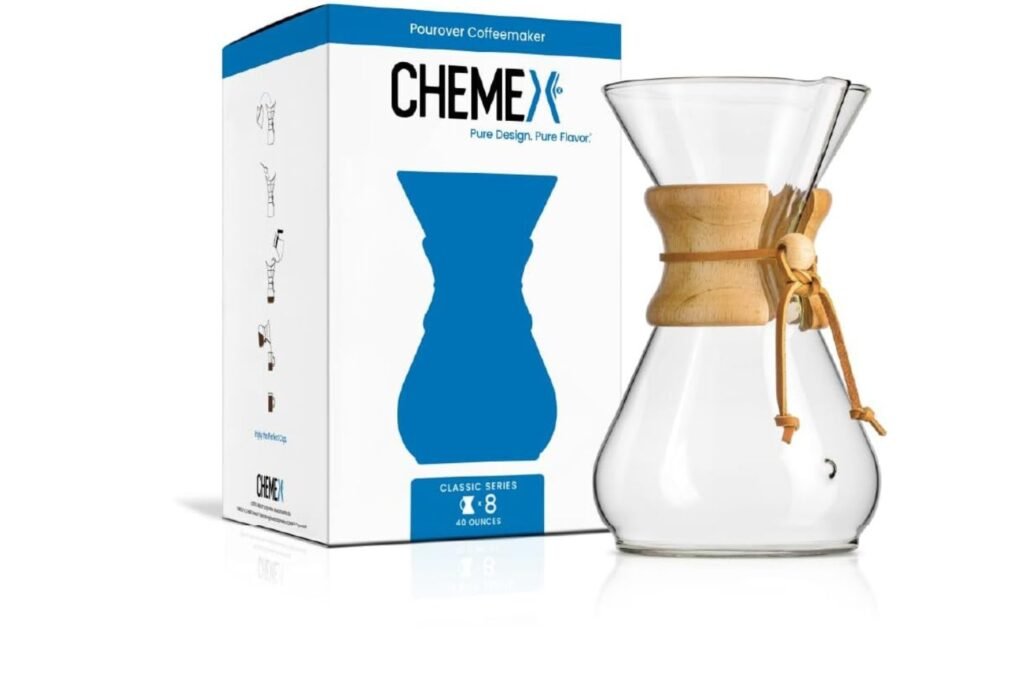
The Chemex is iconic for a reason. Made from thick borosilicate glass, it contains no plastic in the brewing path. Its hourglass shape encourages even extraction while preserving aromatic clarity, making it a favorite among purists focused on clean, chemical-free brewing.
Using Chemex feels intentional. You control temperature, flow, and timing without hidden components. That transparency is why many experts consider it a benchmark non toxic coffee maker for home use.
Key Features
- Borosilicate glass construction
- No internal plastic components
- Thick, durable design
Pros
- Extremely clean flavor
- Easy to inspect and clean
Cons
- Requires manual technique
- Glass needs careful handling
Who should buy: Coffee enthusiasts who value purity, flavor clarity, and a ritualized brewing experience. Ideal for people comfortable with manual pour-over techniques and who prioritize chemical-free materials.
Who should skip: Anyone needing a fast, automatic brew or who prefers a low-maintenance, hands-off machine. Fragile glass may also deter households with children or high traffic kitchens.
Best Non Toxic Pour Over Coffee Makers
Hario V60 Glass Dripper – Manual Pour Over Coffee Maker
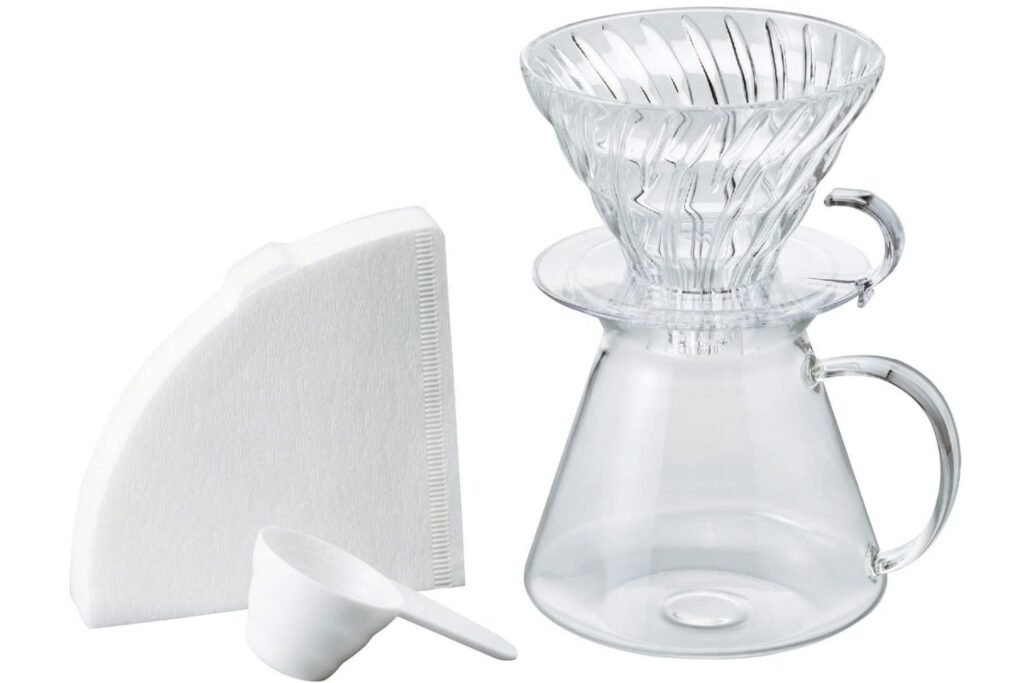
Hario’s V60 glass dripper pairs minimalist design with brewing precision. The spiral ridges promote airflow while the glass dripper avoids chemical interaction. It’s lightweight, affordable, and widely used in specialty cafés.
This brewer rewards practice. As a manual pour over, it gives full control with almost zero material risk. For those learning safe brewing, it’s an accessible entry into the best non toxic coffee maker category.
Key Features
- Heat-resistant glass
- Spiral cone design
- Simple construction
Pros
- Affordable and widely available
- Excellent flavor clarity
Cons
- Requires technique
- Needs separate server
Who should buy: Beginners or hobbyists looking for an affordable, safe entry into pour-over brewing. Great for users who enjoy experimenting with brewing ratios and extraction times.
Who should skip: People who want automatic convenience or need larger volume brewing for multiple cups at once.
Best Non Toxic French Press Coffee Makers
Bayka Classic – French Press Coffee Maker
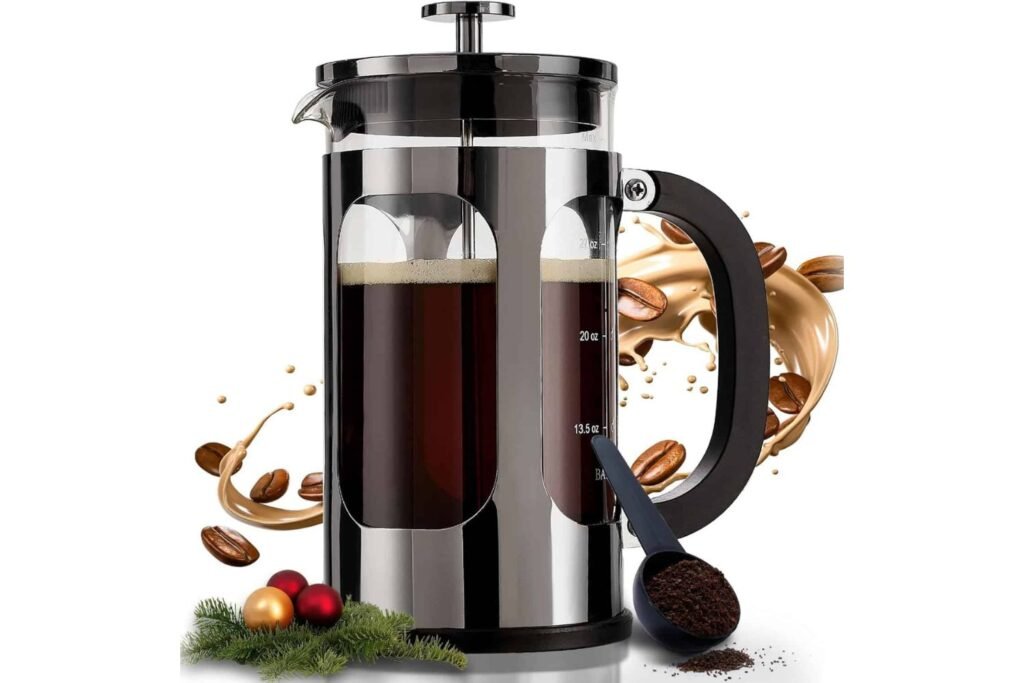
Bayka’s classic french press blends elegance with function. The brewer uses borosilicate glass and a reusable stainless filter, removing the need for paper or plastic accessories.
Its balanced extraction and minimal materials make it appealing for daily use. If you want a stylish yet practical non toxic coffee maker, Bayka fits neatly into modern kitchens.
Key Features
- Glass body with steel filter
- No disposable filters
- Compact footprint
Pros
- Eco-friendly design
- Clean, full-bodied coffee
Cons
- Filter requires regular cleaning
- Slower brew time
Who should buy: Environmentally conscious brewers who prefer reusable filters and sustainable design. Perfect for those who want a clean flavor without disposable paper filters.
Who should skip: Users who dislike manual pouring or want instant coffee without extra steps.
Best Non Toxic French Press Coffee Makers
French Press Coffee Gator – Stainless Steel French Press
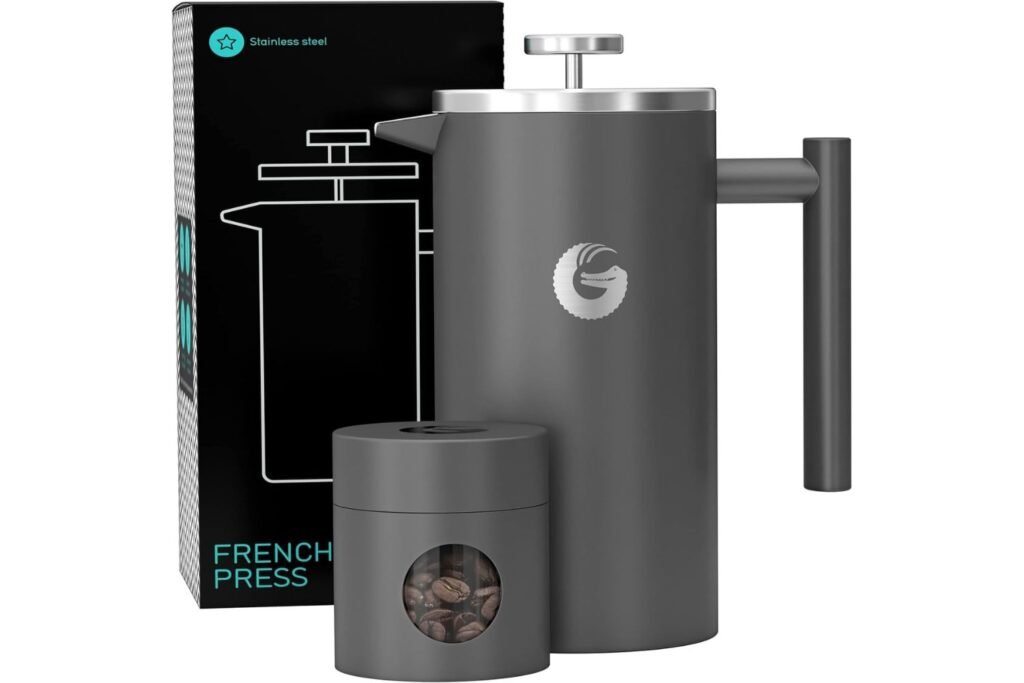
The Coffee Gator uses double-wall food-grade stainless steel, eliminating glass breakage and plastic contact. Heat retention is excellent, and the metal construction prevents flavor contamination while keeping coffee hot longer than glass alternatives.
It’s designed for daily use. For households seeking durability and safety without complexity, this model delivers consistency and confidence as a reliable non toxic coffee maker.
Key Features
- Double-wall stainless steel body
- Rust-resistant materials
- Insulated design
Pros
- Very durable
- Excellent heat retention
Cons
- Heavier than glass
- Higher upfront cost
Who should buy: Daily coffee drinkers who value durability, heat retention, and a strong, full-bodied cup. Great for households with frequent brewing needs.
Who should skip: Anyone seeking a lightweight, portable option or someone who dislikes metal-bodied brewers.
Best Non Toxic French Press Coffee Makers
Frieling Double Wall – Stainless Steel French Press
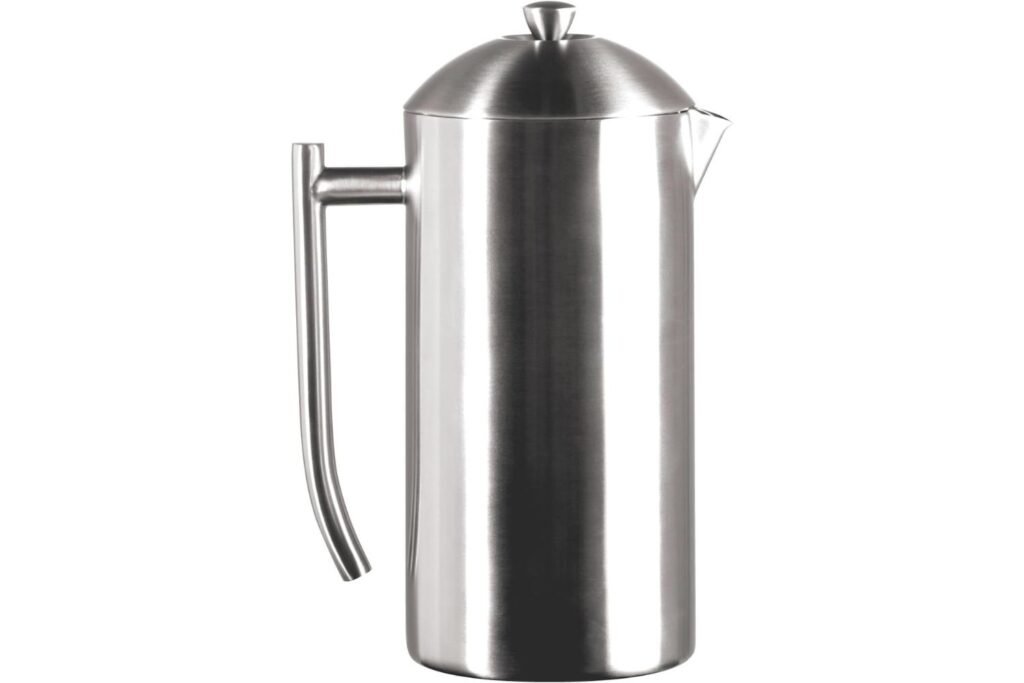
Frieling’s French press is known for precision engineering. Made entirely from surgical-grade stainless steel, it avoids coatings, liners, or mixed materials that often raise safety concerns.
This press appeals to serious coffee drinkers. Its solid construction and clean extraction make it a long-term investment for anyone prioritizing the best non toxic coffee maker over convenience features.
Key Features
- All stainless steel construction
- No internal plastic
- Tight filtration system
Pros
- Extremely long-lasting
- Pure flavor profile
Cons
- Premium price
- Minimal visual feedback
Who should buy: Users wanting a high-end, low-maintenance French press that lasts for years. Excellent for families or heavy coffee drinkers.
Who should skip: Buyers with limited counter space or those who prefer glass aesthetics over stainless steel.
Best Non Toxic French Press Coffee Makers
Espro P7 – Stainless Steel French Press
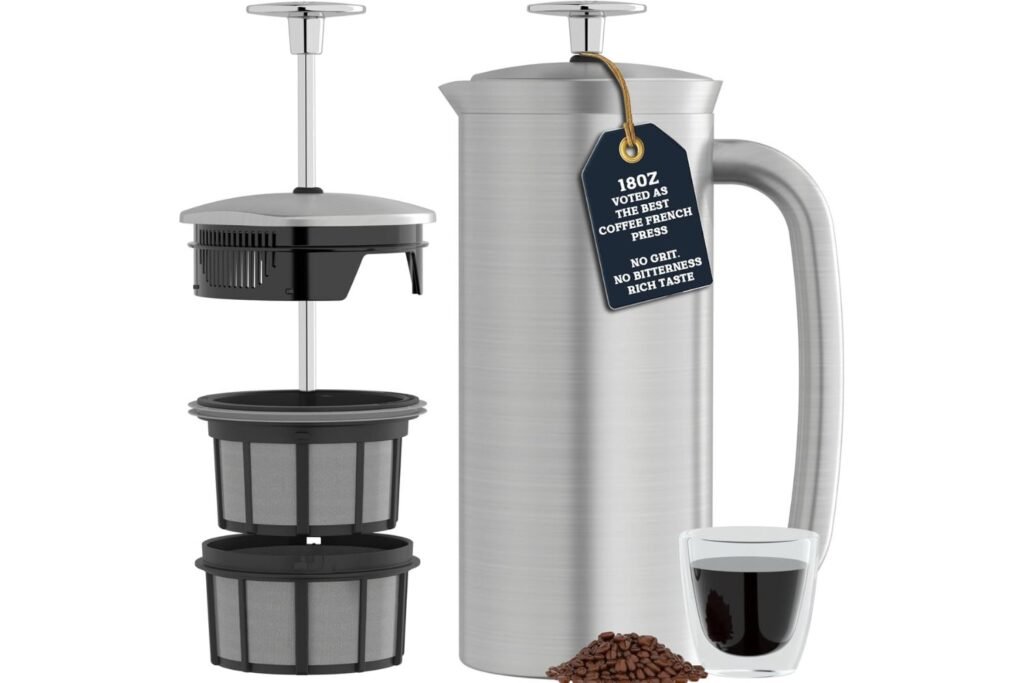
The Espro P7 stands out for its patented double micro-filter system. Built with stainless steel, it minimizes sediment while maintaining safety and heat stability throughout the brew cycle.
This model suits those who want cleaner cups without chemical exposure. It bridges the gap between manual brewing and refinement within the best non toxic coffee maker category.
Key Features
- Dual micro-filtration
- Insulated steel body
- Leak-resistant design
Pros
- Very clean cup
- Retains heat well
Cons
- More parts to clean
- Higher complexity
Who should buy: Coffee purists seeking cleaner cups with minimal sediment. Perfect for enthusiasts who enjoy precise filtration in a durable press.
Who should skip: People on a tight budget or those who find multi-part cleaning inconvenient.
Best Non Toxic French Press Coffee Makers
Bodum Chambord – Glass French Press (Stainless Steel Frame)
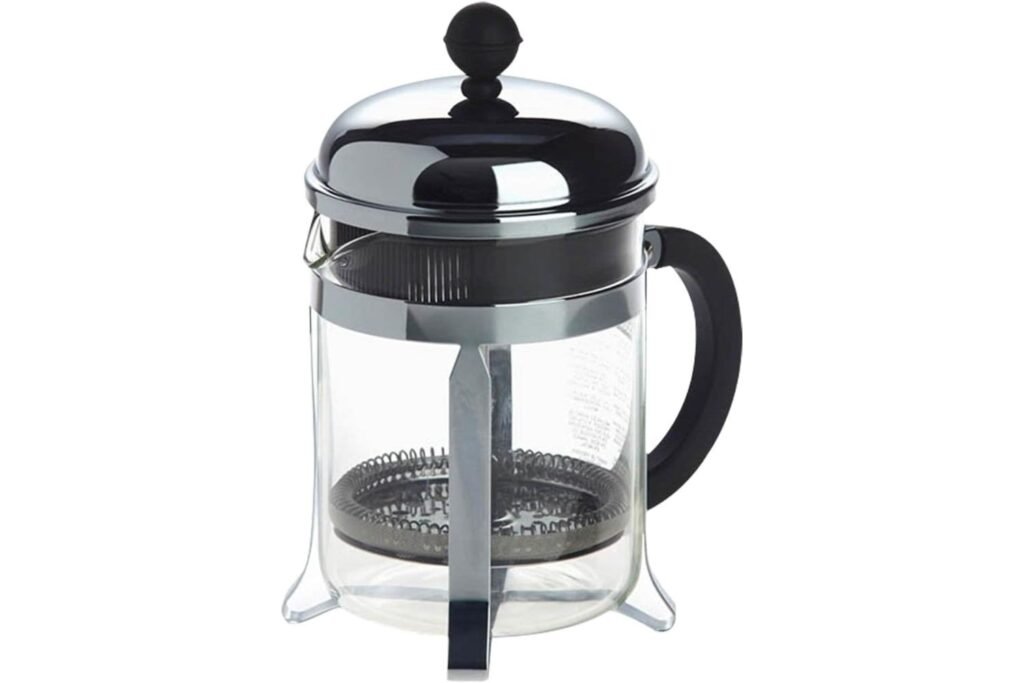
The Bodum Chambord blends tradition with safety. Its borosilicate glass beaker resists heat stress, while the stainless frame adds structural support without introducing plastic components.
This press appeals to users who enjoy watching extraction. When maintained properly, it remains a strong contender for a visually pleasing non toxic coffee maker.
Key Features
- Borosilicate glass carafe
- Steel frame and plunger
- Classic design
Pros
- Affordable
- Clean, neutral taste
Cons
- Glass requires care
- Less heat retention
Who should buy: Casual coffee drinkers who want a visually appealing, classic press for occasional use. Glass lets you watch the brewing process.
Who should skip: Heavy users concerned about fragility or people who need extended heat retention.
Best Non Toxic French Press Coffee Makers
Mueller French Press – Stainless Steel Coffee Press
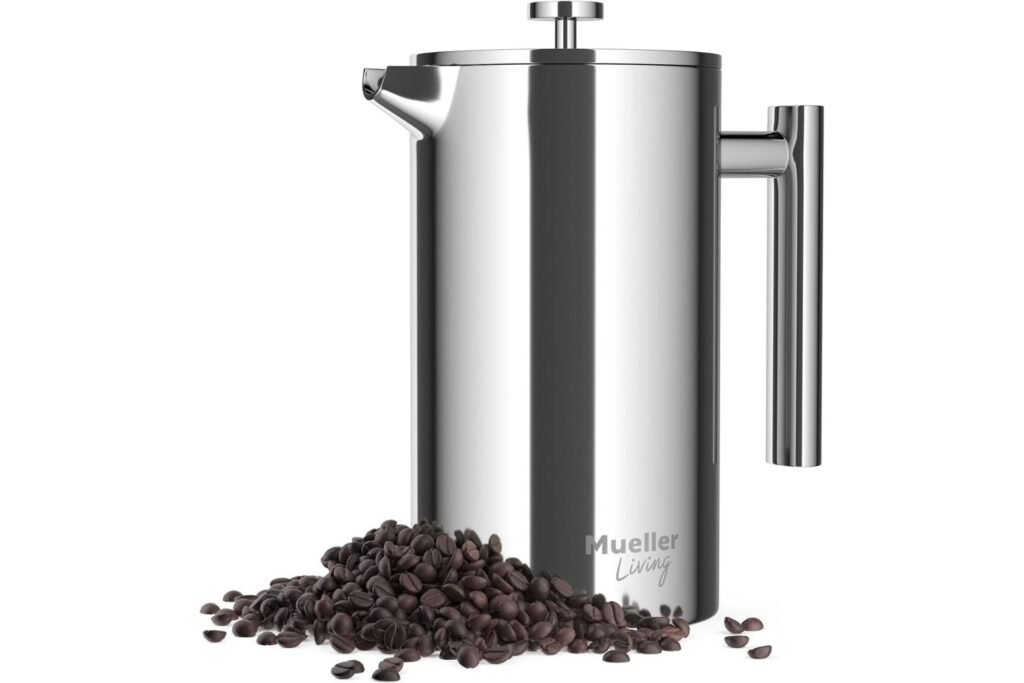
Mueller’s stainless French press focuses on simplicity and value. The steel construction avoids coatings and internal plastics, making it suitable for those reducing daily chemical exposure.
It’s often chosen by first-time buyers seeking the best non toxic coffee maker without premium pricing. While basic, it performs reliably and cleans easily.
Key Features
- Stainless steel body
- Simple filter system
- Lightweight build
Pros
- Budget-friendly
- Easy maintenance
Cons
- Moderate insulation
- Basic filtration
Who should buy: Beginners looking for an affordable, safe French press with solid construction. Perfect for households starting the switch to non toxic brewing.
Who should skip: Experienced brewers seeking higher-end filtration or advanced thermal insulation.
Best Non Toxic Drip Coffee Makers
OXO Brew 8-Cup – Drip Coffee Maker (Thermal Stainless Steel Carafe)
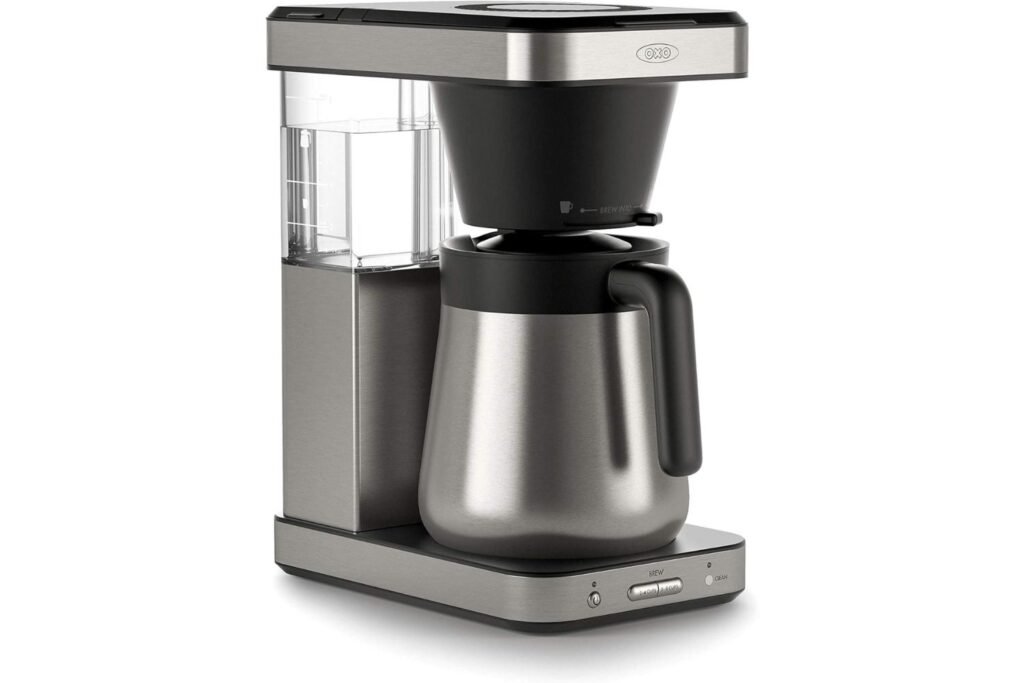
The OXO Brew 8-Cup emphasizes temperature control and safer construction. Its stainless steel thermal carafe avoids heated glass plates, reducing material stress and potential chemical release.
While not entirely plastic-free internally, OXO’s design limits exposure and improves taste. It’s a strong compromise for households needing convenience without abandoning non toxic coffee maker principles.
Key Features
- Stainless steel thermal carafe
- Precise temperature control
- Compact footprint
Pros
- Consistent brewing
- Better heat safety
Cons
- Some internal plastic
- Higher cost
Who should buy: Busy professionals and families who need automated brewing with moderate safety. Works well for those prioritizing speed and convenience.
Who should skip: Purists seeking fully plastic-free machines or small-batch pour-over enthusiasts.
Best Non Toxic Drip Coffee Makers
Technivorm Moccamaster KBT – Drip Coffee Maker (Glass or Stainless Options)
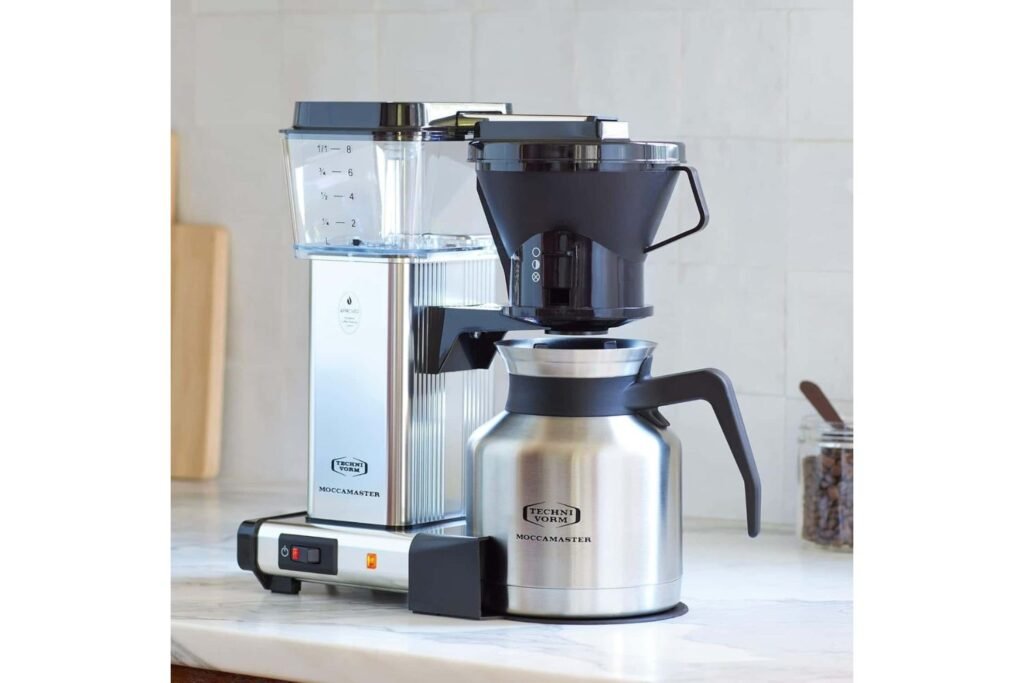
Technivorm machines are hand-assembled and highly regarded for build quality. Available with glass or stainless steel carafes, they use copper heating elements for stable temperature control.
Transparency sets this brewer apart. Clear material disclosure and long lifespan make it a top-tier best non toxic coffee maker for automated brewing.
Key Features
- Copper heating system
- Multiple carafe options
- Durable construction
Pros
- Exceptional longevity
- Excellent flavor
Cons
- Expensive
- Larger footprint
Who should buy: Buyers looking for premium, long-lasting automatic drip machines with high safety standards. Excellent for daily brewing without flavor compromise.
Who should skip: Budget-conscious shoppers or people who need compact, low-footprint machines.
Best Non Toxic Drip Coffee Makers
Cuisinart PurePrecision – Drip Coffee Maker (Glass Carafe)
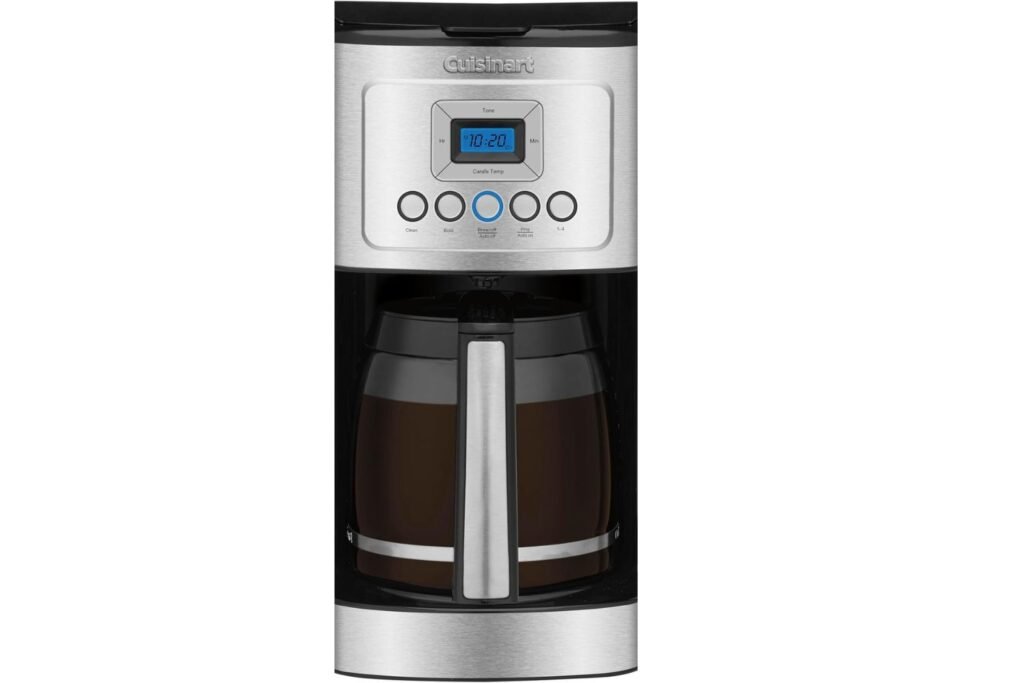
The PurePrecision focuses on programmable convenience while improving material safety. Its glass carafe avoids plastic contact during serving, though internal components still include some synthetic parts.
This model works best for users transitioning toward safer brewing. It balances automation and awareness, making it a reasonable non toxic coffee maker step-up option.
Key Features
- Glass carafe
- Programmable brewing
- Adjustable settings
Pros
- User-friendly
- Widely available
Cons
- Internal plastic remains
- Average durability
Who should buy: Casual home brewers seeking programmable convenience and partial safety improvements. Ideal for people transitioning from fully plastic machines.
Who should skip: Safety purists avoiding any internal plastics or users seeking premium brewing quality.
Specialty Non Toxic Coffee Makers Worth Considering
Yama Glass – Stovetop Vacuum Coffee Maker
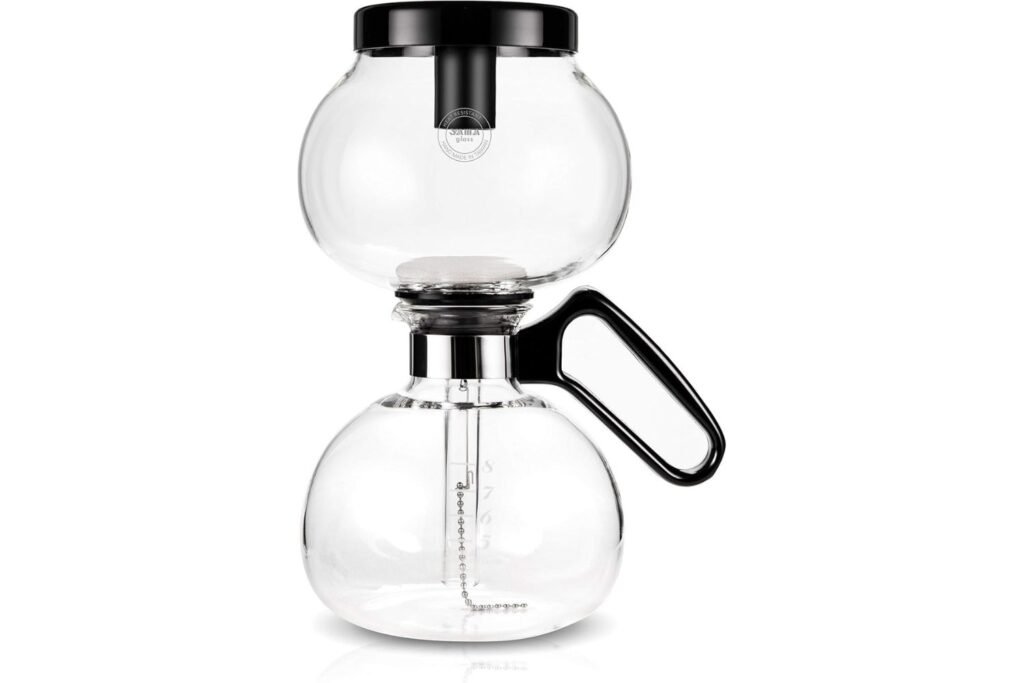
The Yama vacuum brewer uses borosilicate glass chambers and stovetop heat, avoiding internal electronics and plastics entirely. The result is a clean, aromatic cup with minimal material interference.
While slower and more hands-on, this brewer appeals to enthusiasts seeking purity. It represents one of the purest expressions of the best non toxic coffee maker philosophy.
Key Features
- All-glass chambers
- External heat source
- Traditional siphon design
Pros
- Extremely clean brew
- No internal plastics
Cons
- Steep learning curve
- Time-intensive
Who should buy: Enthusiasts who enjoy hands-on brewing rituals and want maximum safety with zero plastic contact. Great for occasional, ceremonial coffee preparation.
Who should skip: Users needing fast, everyday coffee or large-volume brewing. The learning curve can deter beginners.
How to Choose the Best Non Toxic Coffee Maker for Your Lifestyle
Choosing a safer brewer starts with honesty about how you drink coffee. Someone who enjoys slow mornings may love manual brewing, while busy households need automation. The best non toxic coffee maker fits your routine without forcing shortcuts that reintroduce unsafe materials.
Counter space, cleaning habits, and durability matter more than features. Glass favors purity but needs care. Stainless steel trades visibility for strength. When safety aligns with daily use, consistency follows. That balance defines a coffee maker you’ll actually keep using long term.
Taste preference also plays a role. Pour over highlights clarity, French press emphasizes body, and drip offers familiarity. Matching flavor style with safe materials ensures you never compromise enjoyment while protecting health through a truly non toxic coffee maker choice.
Best Overall Choice (Most People)
For most buyers, the Chemex Classic Series earns the top spot. Its borosilicate glass, zero plastic water contact, excellent flavor clarity, and timeless durability make it the safest and most reliable best non toxic coffee maker for daily home use. It balances purity, simplicity, and long-term trust better than any other option.
Best for Durability and Low Effort
If you want strength, insulation, and ease, the Frieling Double Wall Stainless Steel French Press is the smartest purchase. It’s nearly indestructible, fully steel, and perfect for people who want a non toxic coffee maker that works every day without delicate handling.
Best Automatic Option
For those who need automation, the Technivorm Moccamaster KBT stands above other drip machines. While not entirely plastic-free, its transparent build quality, stable heating, and long lifespan make it the safest choice in the automatic category.
Common Myths About Non Toxic Coffee Makers
Many people believe glass is fragile and impractical. In reality, borosilicate glass handles temperature changes far better than standard glass. When paired with thoughtful handling, it lasts years and stays chemically stable under repeated heat exposure.
Another myth suggests stainless steel alters flavor. Poor-quality alloys can, but food-grade stainless steel remains neutral and widely used in professional kitchens. The biggest misconception is assuming “BPA-free” equals safe. The best non toxic coffee maker avoids unnecessary plastics entirely, not just renamed chemicals.
Conclusion:
Choosing the best non toxic coffee maker isn’t about perfection. It’s about reducing avoidable exposure while improving daily rituals. Glass and stainless steel outperform mixed-material machines in safety, flavor, and lifespan when chosen thoughtfully.
The right brewer fits your routine, respects your health, and disappears into habit. When materials stay clean and stable, coffee tastes better and feels better. That quiet confidence is the real reward of brewing smarter, every single morning.
FAQS
1. What is the healthiest non-toxic coffee maker?
Choose a brewer made of glass or stainless steel (like a pour-over or French press) to avoid potential chemical leaching from plastics.
2. Are there BPA-free coffee makers?
Yes — many modern coffee makers use BPA-free plastics or predominantly glass and stainless steel parts to minimize harmful chemical exposure.
3. How to brew coffee to avoid microplastics?
Use brewing methods with no plastic contact, such as stainless steel or glass pour-overs/French presses and paper filters, to reduce microplastic exposure.
4. Can you flush microplastics out of your body?
There’s no established way to “flush out” microplastics once ingested, so reducing sources is the best practical approach.
5. Which is healthier, French press or drip coffee?
French press and drip coffee can both be healthy; French press retains more oils and flavor, while paper-filtered drip removes some oils linked to cholesterol effects.